What is RYTELO?

RYTELO (imetelstat) is a prescription medicine used to treat a condition called low- to intermediate-1 risk myelodysplastic syndromes (MDS) in adults: See more

  • with anemia (low red blood cell counts) who need blood transfusions of 4 or more red blood cell units over 8 weeks

and

  • who have not responded to, have stopped responding to, or cannot be treated with medicines called erythropoiesis-stimulating agents (ESAs).

It is not known if RYTELO is safe and effective in children.

Your road to fewer transfusions may start with RYTELO

Discover what makes RYTELO different and how it may help people who have lower-risk MDS with anemia (LR-MDS).

Discover what makes RYTELO different and how it may help people who have lower-risk MDS with anemia (LR-MDS).

A magnifying glass icon to represent taking a closer look at how RYTELO works

RYTELO works in a different way than other medicines you may have tried

RYTELO is the only treatment for LR-MDS that works by targeting telomerase, an enzyme that helps abnormal cells multiply.

A deeper look:

  • Your body has many different types of cells. Some use a natural enzyme called telomerase to help them grow and divide.

  • In MDS, telomerase can become too active, helping abnormal cells keep growing when they shouldn’t.

  • RYTELO blocks telomerase to help stop abnormal MDS cells from multiplying.

The way RYTELO works was evaluated in nonclinical studies, which are studies conducted inside a laboratory instead of with real patients.

RYTELO makes fewer transfusions possible

An older man with a beard smiles, wearing a burgundy sweater.

How RYTELO was studied in patients

RYTELO was studied in 178 adults with LR-MDS who had anemia and needed frequent blood transfusions. Patients could join the study if treatment with an erythropoiesis-stimulating agent did not work, had stopped working, or was not an option for them.

  • 118 patients received RYTELO
  • 60 patients received a placebo
    (a treatment with no active medication)

The goal of the study was to see if patients treated with RYTELO would need fewer red blood cell transfusions compared with those who received placebo. If needed, patients could still receive supportive care treatments like red blood cell transfusions, platelet transfusions, and growth factors.

For many patients, RYTELO made
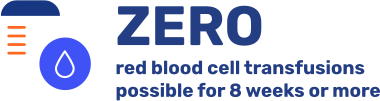
ZERO transfusions
possible for 8 weeks or more

Nearly 40% of patients taking RYTELO (47 out of 118) required zero red blood cell transfusions for 8 consecutive weeks or more vs 15% of patients taking placebo (9 out of 60).

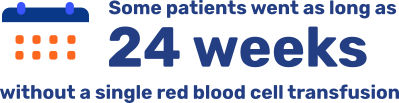
Some patients went as long as
24 weeks
without a single red blood cell transfusion

28% of patients taking RYTELO (33 out of 118) required ZERO red blood cell transfusions for 24 consecutive weeks or more vs 3% of patients taking placebo (2 out of 60).

Ask your healthcare provider if RYTELO is the right next step for you

The Patient Brochure can help you discuss the possible results and side effects of RYTELO.

A healthcare provider discusses treatment options with a seated older male patient.

RYTELO is different than other medicines you’ve tried. That means the possible side effects may be different too.

Expand

What is RYTELO?

RYTELO (imetelstat) is a prescription medicine used to treat a condition called low- to intermediate-1 risk myelodysplastic syndromes (MDS) in adults:

  • with anemia (low red blood cell counts) who need blood transfusions of 4 or more red blood cell units over 8 weeks

and

  • who have not responded to, have stopped responding to, or cannot be treated with medicines called erythropoiesis-stimulating agents (ESAs).

It is not known if RYTELO is safe and effective in children.

Please see RYTELO (imetelstat) full Prescribing Information, including Medication Guide.

Important Safety Information

Before you receive RYTELO, tell your healthcare provider about all of your medical conditions, including if you:

  • are pregnant or plan to become pregnant. RYTELO may harm your unborn baby and may cause loss of pregnancy (miscarriage). Tell your healthcare provider right away if you become pregnant or think you may be pregnant during treatment with RYTELO.

Females who are able to become pregnant:

  • Your healthcare provider will perform a pregnancy test before you are given RYTELO.
  • You should use effective birth control (contraception) during treatment with RYTELO and for 1 week after your last dose.
  • are breastfeeding or plan to breastfeed. It is not known if RYTELO passes into your breastmilk. Do not breastfeed during treatment with RYTELO and for 1 week after your last dose.

Tell your healthcare provider about all the medicines you take, including prescription and over-the-counter medicines, vitamins, and herbal supplements.

What is the most important information I should know about RYTELO?

RYTELO may cause serious side effects, including:

  • Low platelet counts (thrombocytopenia). Low platelet counts are common during treatment with RYTELO and can also be severe. Low platelet counts can increase your risk for bleeding. Your healthcare provider may give you platelet transfusions to reduce the risk of bleeding if you develop a low platelet count during treatment with RYTELO. Tell your healthcare provider right away if you develop any signs or symptoms of bleeding, including:
    • unusual bleeding or bruising
    • bleeding that lasts a long time
    • nosebleeds
    • vomiting blood
    • blood in your stool or black tarry stool
  • Low neutrophil counts (neutropenia). Low counts of a type of white blood cell called neutrophils are common during treatment with RYTELO and can also be severe. Low neutrophil counts can increase your risk for infections, including serious infections and sepsis. Your healthcare provider may give you medicines before you start treatment to help prevent neutropenia and infections and may treat you with medicines if you develop these problems during treatment with RYTELO. Tell your healthcare provider right away if you develop any signs or symptoms of infection during treatment with RYTELO, including:
    • fever
    • shortness of breath or trouble breathing
    • cough
    • chills
    • pain or burning when you urinate

Your healthcare provider will do blood tests to check your platelet and neutrophil counts before starting treatment with RYTELO, weekly for the first 2 cycles of treatment, before you receive each additional cycle, and as needed during your treatment.

Your healthcare provider may delay your next treatment, decrease your dose, or stop treatment with RYTELO if you develop thrombocytopenia or neutropenia during treatment.

What are the possible side effects of RYTELO?

RYTELO may cause serious side effects, including:

  • See “What is the most important information I should know about RYTELO?”
  • Infusion-related reactions. RYTELO can cause infusion-related reactions during or after your infusion that can be severe, including a severe sudden increase in blood pressure called hypertensive crisis. Your healthcare provider will give you medicines before each RYTELO infusion to help prevent or lessen infusion-related reactions and will watch you for at least 1 hour after your infusion. If you develop infusion-related reactions, your healthcare provider may infuse RYTELO more slowly, temporarily stop, or permanently stop your treatment. Tell your healthcare provider if you develop any signs or symptoms of infusion-related reactions, including:
    • stomach pain
    • joint pain
    • weakness and tiredness
    • back and bone pain
    • diarrhea
    • redness
    • headache
    • high blood pressure
    • not feeling well
    • chest pain that is not related to your heart
    • itching
    • hives

The most common side effects of RYTELO include:

  • decreased platelet counts
  • decreased white blood cell counts
  • decreased neutrophil counts
  • increased liver enzymes (AST, alkaline phosphatase, and ALT)
  • tiredness
  • longer than usual blood clotting times
  • joint, bone and muscle pain
  • Covid-19 infections
  • headache

These are not all of the possible side effects of RYTELO. Call your doctor for more information and medical advice about side effects. You are encouraged to report negative side effects of prescription drugs to the FDA. Visit www.fda.gov/MedWatch or call 1-800-FDA-1088.

Please see RYTELO (imetelstat) full Prescribing Information, including Medication Guide.

What is RYTELO?

RYTELO (imetelstat) is a prescription medicine used to treat a condition called low- to intermediate-1 risk myelodysplastic syndromes (MDS) in adults:

  • with anemia (low red blood cell counts) who need blood transfusions of 4 or more red blood cell units over 8 weeks

and

  • who have not responded to, have stopped responding to, or cannot be treated with medicines called erythropoiesis-stimulating agents (ESAs).

It is not known if RYTELO is safe and effective in children.

Please see RYTELO (imetelstat) full Prescribing Information, including Medication Guide.

Important Safety Information

Before you receive RYTELO, tell your healthcare provider about all of your medical conditions, including if you:

  • are pregnant or plan to become pregnant. RYTELO may harm your unborn baby and may cause loss of pregnancy (miscarriage). Tell your healthcare provider right away if you become pregnant or think you may be pregnant during treatment with RYTELO.

Females who are able to become pregnant:

  • Your healthcare provider will perform a pregnancy test before you are given RYTELO.
  • You should use effective birth control (contraception) during treatment with RYTELO and for 1 week after your last dose.
  • are breastfeeding or plan to breastfeed. It is not known if RYTELO passes into your breastmilk. Do not breastfeed during treatment with RYTELO and for 1 week after your last dose.

Tell your healthcare provider about all the medicines you take, including prescription and over-the-counter medicines, vitamins, and herbal supplements.

What is the most important information I should know about RYTELO?

RYTELO may cause serious side effects, including:

  • Low platelet counts (thrombocytopenia). Low platelet counts are common during treatment with RYTELO and can also be severe. Low platelet counts can increase your risk for bleeding. Your healthcare provider may give you platelet transfusions to reduce the risk of bleeding if you develop a low platelet count during treatment with RYTELO. Tell your healthcare provider right away if you develop any signs or symptoms of bleeding, including:
    • unusual bleeding or bruising
    • bleeding that lasts a long time
    • nosebleeds
    • vomiting blood
    • blood in your stool or black tarry stool
  • Low neutrophil counts (neutropenia). Low counts of a type of white blood cell called neutrophils are common during treatment with RYTELO and can also be severe. Low neutrophil counts can increase your risk for infections, including serious infections and sepsis. Your healthcare provider may give you medicines before you start treatment to help prevent neutropenia and infections and may treat you with medicines if you develop these problems during treatment with RYTELO. Tell your healthcare provider right away if you develop any signs or symptoms of infection during treatment with RYTELO, including:
    • fever
    • shortness of breath or trouble breathing
    • cough
    • chills
    • pain or burning when you urinate

Your healthcare provider will do blood tests to check your platelet and neutrophil counts before starting treatment with RYTELO, weekly for the first 2 cycles of treatment, before you receive each additional cycle, and as needed during your treatment.

Your healthcare provider may delay your next treatment, decrease your dose, or stop treatment with RYTELO if you develop thrombocytopenia or neutropenia during treatment.

What are the possible side effects of RYTELO?

RYTELO may cause serious side effects, including:

  • See “What is the most important information I should know about RYTELO?”
  • Infusion-related reactions. RYTELO can cause infusion-related reactions during or after your infusion that can be severe, including a severe sudden increase in blood pressure called hypertensive crisis. Your healthcare provider will give you medicines before each RYTELO infusion to help prevent or lessen infusion-related reactions and will watch you for at least 1 hour after your infusion. If you develop infusion-related reactions, your healthcare provider may infuse RYTELO more slowly, temporarily stop, or permanently stop your treatment. Tell your healthcare provider if you develop any signs or symptoms of infusion-related reactions, including:
    • stomach pain
    • joint pain
    • weakness and tiredness
    • back and bone pain
    • diarrhea
    • redness
    • headache
    • high blood pressure
    • not feeling well
    • chest pain that is not related to your heart
    • itching
    • hives

The most common side effects of RYTELO include:

  • decreased platelet counts
  • decreased white blood cell counts
  • decreased neutrophil counts
  • increased liver enzymes (AST, alkaline phosphatase, and ALT)
  • tiredness
  • longer than usual blood clotting times
  • joint, bone and muscle pain
  • Covid-19 infections
  • headache

These are not all of the possible side effects of RYTELO. Call your doctor for more information and medical advice about side effects. You are encouraged to report negative side effects of prescription drugs to the FDA. Visit www.fda.gov/MedWatch or call 1-800-FDA-1088.

Please see RYTELO (imetelstat) full Prescribing Information, including Medication Guide.